Too Many Cooks: How Collaboration Can Quietly Kill the Thing That Made Your Work Special
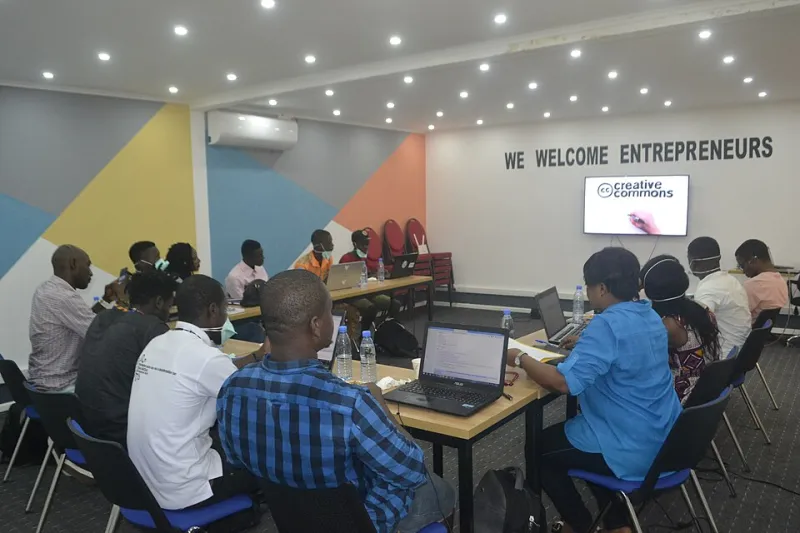
Photo: Serieminou, CC BY-SA 4.0, via Wikimedia Commons
There's a version of collaboration that makes your work stronger. And then there's the other kind—the kind where you gather feedback, incorporate notes, build a team, keep everybody happy, and end up staring at a finished piece that technically has no problems but also has no pulse.
That second version is way more common than people admit.
The frustrating thing is that it usually doesn't feel like a mistake while it's happening. Every individual decision seems reasonable. You soften a sharp edge here because someone pointed out it might alienate readers. You cut the weird structural choice there because two people found it confusing. You adjust the tone because the group consensus leaned warmer. None of those changes are obviously wrong. But at the end of that process, something essential has quietly walked out the door.
The Paradox Nobody Warns You About
Here's the thing about a distinctive creative voice: it's almost always built on choices that a portion of your audience won't love. The stuff that makes certain readers obsessive fans of your work is usually the same stuff that makes other people bounce off it entirely. Specificity, strangeness, an unusual rhythm, a perspective that cuts against the grain—these are features, not bugs. But when you run those qualities through a committee, they tend to get smoothed out, because the people giving you notes are each responding to their own friction points.
A room full of smart, well-meaning collaborators will, almost by default, push your work toward the middle. Not out of malice. Just because that's what happens when you average out a bunch of different sensibilities. The notes aren't wrong. The process is just working exactly as designed—and what it's designed to do isn't always what you actually need.
This is the collaboration trap. You go in looking for help making your vision clearer, and you come out with something that's been negotiated rather than made.
Not All Collaboration Is the Same
It's worth drawing a hard line between two different kinds of outside input, because conflating them causes a lot of unnecessary damage.
The first kind is clarifying collaboration. This is feedback that helps you understand where your vision isn't landing—where the gap between what you intended and what's actually on the page is too wide. A reader tells you a scene isn't working, and when you dig into why, you realize you were relying on context that only exists in your head. That note is genuinely useful. It helps you execute your vision more fully, not redirect it.
The second kind is substituting collaboration. This is when someone's feedback isn't really about execution—it's about preference. They don't connect with the tone, or the subject matter, or the structural choice you made. The note isn't pointing at a failure in your craft. It's pointing at a difference in taste. Acting on that kind of feedback doesn't sharpen your work. It starts replacing it with something else.
The problem is that both kinds of notes often sound identical in the moment. Learning to tell them apart is one of the most important skills a working creative can develop.
How to Protect Your Core Without Going It Alone
None of this means you should stop collaborating. That would be throwing out something genuinely valuable because it's sometimes misused. The goal is to build a smarter relationship with outside input—one where you stay the author of your own work even when other people are in the room.
Get clear on your vision before you ask for feedback. This sounds obvious, but a lot of creators skip it. If you haven't articulated—even just to yourself—what you're actually trying to do, you have no anchor when the notes start coming in. Every suggestion will seem equally valid because you have no framework for evaluating them. Write down your intentions before you share the work. What feeling are you going for? What's the central idea? What makes this piece yours? That document becomes your reference point.
Choose collaborators who understand what you're making, not just what they'd make instead. The best creative feedback comes from people who can meet your work on its own terms. They don't have to agree with every choice, but they need to be genuinely trying to help you realize your vision rather than steer it toward their preferences. If someone consistently gives you notes that would turn your project into a different project, that's useful information about whether they're the right collaborator for this particular thing.
Treat your instincts as data. When a note makes you feel vaguely hollow—when you act on it and the work feels less like yours—pay attention to that. It's easy to dismiss gut reactions as defensiveness or ego. Sometimes they are. But sometimes that discomfort is your creative sensibility telling you that something important just got cut. Don't ignore it automatically.
Build a filter, not a wall. The point isn't to dismiss outside input—it's to process it deliberately. When you get a note, ask yourself: is this person pointing at a place where my execution failed, or a place where my vision doesn't match their taste? If it's the first, take it seriously. If it's the second, you can acknowledge it without acting on it. You're allowed to say, internally, I hear you, and I'm keeping it anyway.
The Work Still Has to Be Yours
There's a reason certain creative voices cut through the noise while technically competent work disappears without a trace. The ones that stick are almost always the ones where a single sensibility is clearly in charge—where you can feel a human perspective behind every choice, even the imperfect ones. Maybe especially the imperfect ones.
Collaboration can be one of the most energizing parts of the creative process. A great collaborator can push you past your own blind spots and help you make something you couldn't have made alone. But there's a version of collaboration that's actually just a slow process of negotiating your vision into something more palatable, more averaged-out, more acceptable to more people.
The work that lasts usually isn't acceptable to everyone. It's essential to someone.
Keep that in mind the next time the notes start piling up. Take the help. Use the outside eyes. And then make sure that when all of it is said and done, the thing you're putting out into the world is still unmistakably, stubbornly, recognizably yours.