Nobody Is Coming to Give You the Green Light
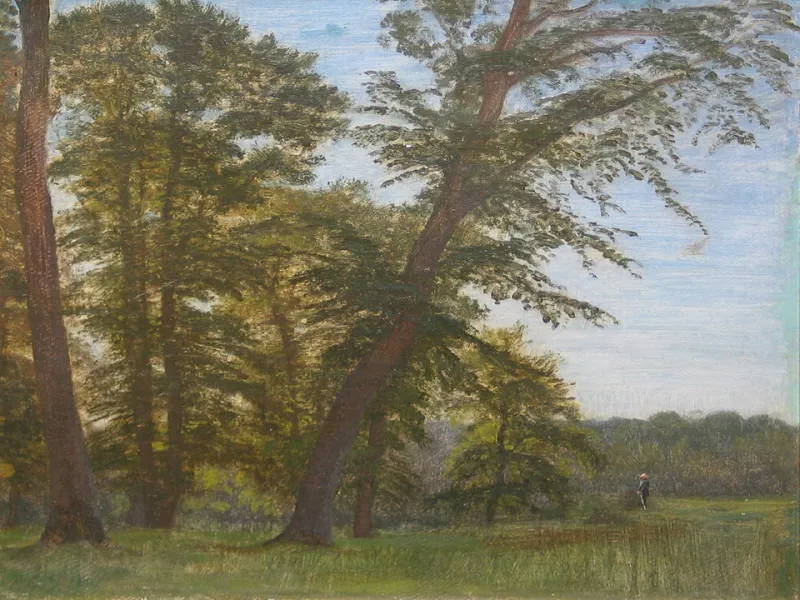
Photo: P. C. Skovgaard, Public domain, via Wikimedia Commons
Here's a scenario that probably sounds familiar: You've got the idea. You've done the research, maybe even sketched out the bones of the thing. And then you wait. You wait for someone to tell you it's good enough, interesting enough, ready enough. You wait for the podcast interview, the agent email, the viral post that confirms you're actually worth taking seriously.
You're not lazy. You're not untalented. You're caught in the permission trap — and it's one of the most quietly devastating patterns in creative work.
The Invisible Gatekeeper Living in Your Head
The permission problem isn't always about external gatekeepers, though those exist too. Publishers, platforms, algorithms, critics — sure, they all have real influence. But the gatekeeper most creators wrestle with isn't at some Manhattan literary agency. It's living rent-free between their ears.
This internal gatekeeper speaks in reasonable-sounding questions. Is this ready? What will people think? Has this already been done better by someone else? These aren't bad questions on their own. The problem is when they become a permanent holding pattern — when "not yet" becomes the default answer regardless of where the work actually stands.
Psychologists sometimes call this a form of approval-seeking behavior wired into us from early on. Think about how school worked: you raised your hand, waited for permission to speak, got graded on whether your answers matched what someone else expected. That system rewarded deference. It punished going off-script. For a lot of people, especially those who were "good students," that conditioning runs deep.
Creativity, though, is fundamentally off-script. And if you've spent decades being rewarded for staying in your lane, moving without permission feels genuinely dangerous — even when nobody's actually stopping you.
What Waiting Actually Costs You
Let's be honest about what the permission trap steals from you, because it's not just time.
It steals specificity. The longer you wait for consensus before committing to an idea, the more you sand down its edges trying to make it palatable to an imaginary audience. The weird, specific, only-you angle gets smoothed away in favor of something more broadly acceptable. And broadly acceptable is usually just another way of saying forgettable.
It steals momentum. Creative work has its own internal weather system. There are seasons when an idea is alive and urgent and wants to be made. Waiting too long — for the right moment, the right feedback, the right conditions — lets that season pass. You come back to the project six months later and wonder why it feels flat. It's not the idea that changed. It's the energy around it.
And it steals originality. Because while you're waiting for permission, someone else isn't. They're making the imperfect version of the thing you were sitting on. Not because they're more talented, but because they decided to move.
Feedback vs. Permission: Knowing the Difference
Here's where it gets nuanced, because not all external input is a crutch. Genuine feedback — the kind that sharpens your thinking, challenges your assumptions, and helps you see blind spots — is genuinely valuable. Dismissing all outside perspective as a weakness is its own kind of trap.
The difference comes down to when and why you're seeking it.
Feedback is useful when you've already committed to the vision and you're trying to execute it better. You know what you're making. You know why. You're asking someone to help you make it more of what it's supposed to be.
Permission-seeking is what happens when you haven't committed yet — when you're essentially asking someone else to make the decision for you. Should I even do this? Is this a good idea? Do you think people will care? These questions sound humble, but they're often a way of outsourcing the scary part of creative ownership.
A good gut-check: if you got the feedback you were hoping for, would you feel confident moving forward? Or would you find a reason to ask someone else? If it's the latter, you're not looking for feedback. You're looking for reassurance — and reassurance is a temporary fix for a structural problem.
How to Actually Move Without Consensus
So what does it look like in practice to stop waiting for the green light?
Start with a commitment deadline, not a quality threshold. Instead of "I'll share this when it's ready," try "I'm shipping this by Friday." Quality thresholds are infinitely movable. Deadlines are not. This isn't about lowering your standards — it's about recognizing that "ready" is often just a feeling, and feelings can be manufactured by anxiety just as easily as by good judgment.
Separate the making from the marketing. A lot of permission-seeking is actually about audience reaction, not the work itself. You're not unsure if the painting is good — you're scared nobody will care. Those are different problems. Make the thing first. Deal with the audience question separately. Conflating them poisons both.
Find your "minimum viable conviction." You don't need to be a hundred percent sure an idea is brilliant before you pursue it. You just need to be sure enough. What's the lowest level of internal confidence that would justify starting? For most worthwhile creative projects, that bar is lower than you think.
Notice the pattern, not just the instance. One moment of hesitation isn't the problem. The pattern is. Start keeping loose track of how often you delay creative decisions waiting for some form of external signal. Once you can see the pattern clearly, it loses some of its grip.
The Work That Only You Can Make
The most original creative work — the stuff that actually cuts through, that people remember and return to — tends to come from a place of stubborn, slightly unreasonable conviction. Not arrogance. Not ignoring all feedback. But a willingness to move forward before the consensus arrives, because you trust your own read on what needs to exist in the world.
That trust isn't something you're born with. It's built by doing the thing without permission, seeing what happens, and surviving the outcome — good or bad. Every time you move without waiting for the green light, you're training yourself out of the approval loop that's been quietly running your creative life.
Nobody is coming to tell you it's okay to start. That's the whole point. The permission you've been waiting for was always yours to give.