Stop Hiding Behind What You Already Know How to Do
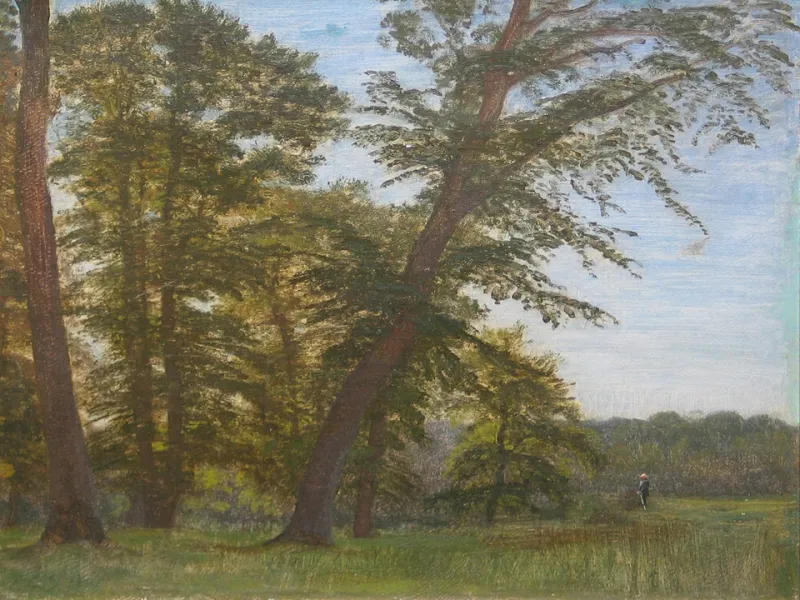
Photo: P. C. Skovgaard, Public domain, via Wikimedia Commons
Here's something I've noticed over years of watching creative people — including myself — navigate their own output: the moment you get genuinely good at something, that's exactly when the real danger sets in.
Not the danger of failure. The danger of comfort.
Because once you've figured out how to reliably produce something that lands — a story structure that works, a visual style that gets the response you want, a rhythm in your writing that readers respond to — the temptation to just keep doing that exact thing becomes almost irresistible. It feels like confidence. It looks like mastery. But a lot of the time, it's something closer to hiding.
The Applause Feedback Loop
Here's the psychological trap in plain terms. When you create something that works, people respond. They share it, they comment, they tell you it's great. Your brain registers that hit of validation and files it under do this again. So you do it again. And it works again. And now you've got a groove.
Except grooves, by definition, are worn-down channels. They exist because you've traveled the same path over and over. And after a while, you're not making choices anymore — you're just following the rut.
This is how talented people end up making competent, forgettable work. Not because they stopped caring. Because they started optimizing for the response instead of the reach.
There's a real difference between repeating what you've mastered and pushing against what you haven't figured out yet. One feels productive. The other feels like being a beginner again — awkward, uncertain, kind of embarrassing. Most people pick the first option and call it professionalism.
Skill Edges Are Where the Interesting Stuff Lives
Every creator has a skill edge — the boundary between what they can do with confidence and what they can almost do but not quite. That edge is uncomfortable. Work produced there is messier. It fails more often. The ratio of bad attempts to good outcomes is way worse than it is in your comfort zone.
And that's exactly why it matters.
When you're working at the edge of your abilities, you're not executing — you're discovering. You're finding out things about your craft, your voice, and your creative instincts that you genuinely could not have accessed any other way. The friction of struggling with something hard is what produces new capability. There's no shortcut around it.
Think about the musicians, writers, or filmmakers whose work genuinely changed things for you. Chances are, their most resonant projects were the ones where they were clearly trying to do something they weren't entirely sure they could pull off. That uncertainty comes through. It creates a kind of aliveness in the work that polish and precision alone can't manufacture.
Why We Retreat to What We've Already Solved
It's worth being honest about why the comfort zone is so appealing, because it's not just laziness. There are real psychological forces at work.
First, there's the fear of regression. If you've built a reputation — even a small one — on a particular kind of work, attempting something outside that range feels like risking what you've already earned. What if people think the new stuff isn't as good? What if you prove, publicly, that you can't do the thing you were reaching for?
Second, there's the identity problem. A lot of creators have quietly fused their sense of self with their creative output. If the work fails, it feels like they failed — not just this one project, but them, as a person, as an artist. Staying inside familiar territory is a way of protecting that identity from scrutiny.
Third — and this one's sneaky — there's the productivity illusion. When you're producing work efficiently in your comfort zone, it feels like you're being creative. You're making things. The output is real. But volume and growth aren't the same metric, and confusing them is one of the most common ways skilled creators stall out.
Deliberate Discomfort Isn't Suffering for Its Own Sake
I want to be clear about something, because this idea gets misread. Pushing past your current skillset doesn't mean constantly torturing yourself or abandoning every project that feels manageable. It doesn't mean treating competence like a character flaw.
What it means is building a practice of intentional reach — regularly taking on creative challenges that require you to develop something you don't currently have. One project where you're genuinely uncertain of the outcome. One story told in a form you haven't fully cracked yet. One creative decision that scares you a little.
The goal isn't perpetual struggle. It's making sure that struggle is part of your regular creative diet, not something you've quietly eliminated in favor of comfort and consistent output.
Athletes understand this intuitively. You don't get stronger by only lifting weights you can already handle. The adaptation happens in response to load that exceeds current capacity. Creative growth works the same way — the capability expands because you demanded more of it than it could comfortably deliver.
What You're Actually Protecting When You Play It Safe
Here's the uncomfortable question worth sitting with: when you default to what you already know, what exactly are you protecting?
Your reputation? Maybe. But a reputation built entirely on repeating past successes is a reputation for the past. It doesn't compound — it just gets maintained until it starts to feel stale, and then it erodes.
Your time? Possibly. Working in unfamiliar territory is slower and less efficient. But efficiency in service of the wrong goal is still waste.
Your self-image as someone who produces good work? That one's closer to the truth for most people. And it's the most worth examining, because the version of you that only makes work you already know how to make is not the version of you that makes the work that actually matters.
The best stuff — the pieces that surprise even you, the projects people come back to years later, the work that actually moves someone — almost never comes from the safe center of your abilities. It comes from the edge, where you were reaching for something you weren't certain you could hold.
That's where the real work is. Most of us just keep finding reasons not to go there.