Scrolling Yourself Into Mediocrity: How Peer Comparison Quietly Rewires Your Creative Brain
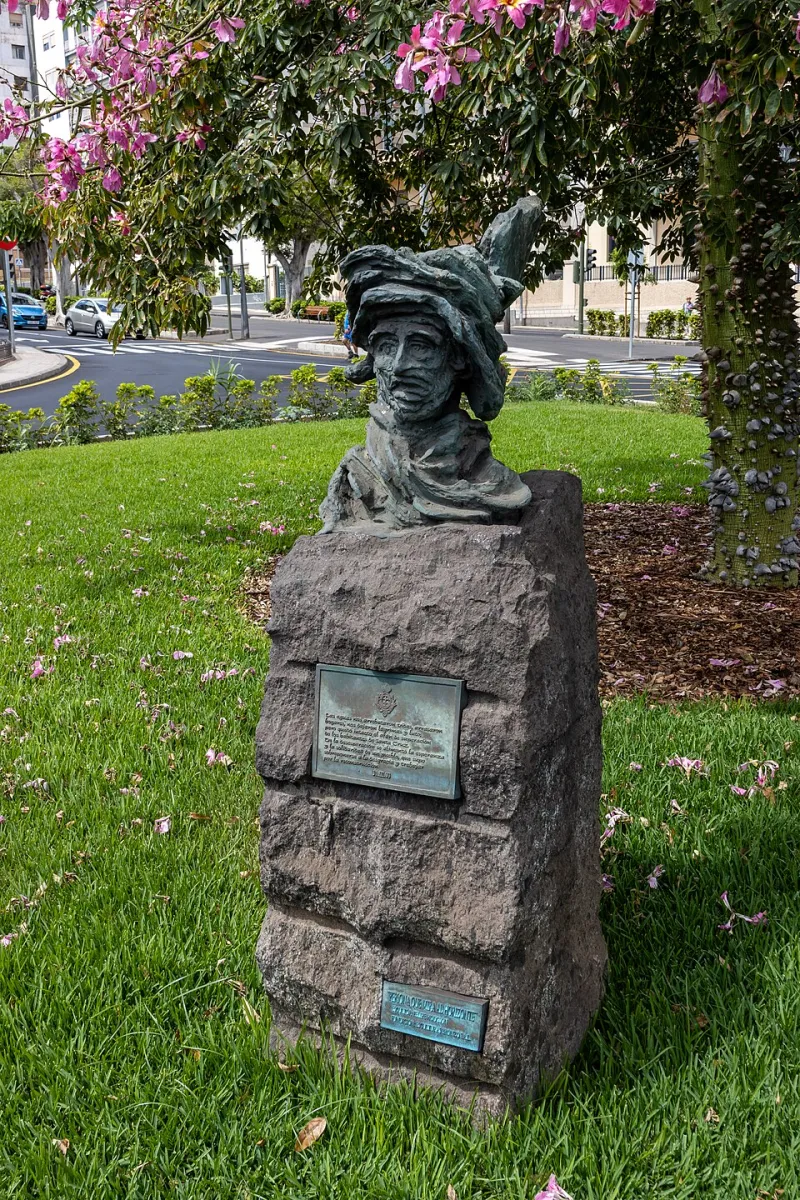
Photo: Photograph by Mike Peel (www.mikepeel.net)., CC BY-SA 4.0, via Wikimedia Commons
Let me paint you a picture that probably sounds familiar.
You sit down to work. Maybe it's a painting, a short story, a song, a screenplay — doesn't matter. You've got something brewing. You open your laptop, and before you start, you figure you'll just do a quick scroll. Check what's happening. See what your people are up to.
Twenty minutes later, you're staring at someone else's finished project — beautifully lit, perfectly captioned, drowning in likes — and the thing you were about to make suddenly feels small. Unpolished. Not enough.
Welcome to the comparison trap. Population: every creator alive right now.
The Psychology Behind Why We Do This
Here's the thing about comparison — it isn't irrational. It's actually a deeply human impulse. Psychologist Leon Festinger coined the term "social comparison theory" back in 1954, and the basic idea is that we naturally evaluate ourselves by looking at others. It helped our ancestors figure out where they stood in the group. Whether they were safe. Whether they needed to work harder to survive.
The problem is that your brain can't tell the difference between a peer group of twenty people in a village and a peer group of forty thousand creators on TikTok. The scale is completely broken, but the psychological response is the same: measure, compare, rank yourself.
And social media has turbocharged this in ways that are genuinely new. You're not comparing yourself to the one or two talented people in your town anymore. You're comparing yourself to the top-performing content from millions of creators, filtered through an algorithm designed to show you the most impressive stuff possible. It's like showing up to a local 5K and somehow only seeing Olympic sprinters at the finish line.
How You Know You've Fallen In
The comparison trap is sneaky because it disguises itself as ambition. You tell yourself you're studying the market. Getting inspired. Staying sharp. And sometimes that's true — but there's a line, and it's easier to cross than you think.
A few signs you've crossed it:
Your creative decisions start coming from outside yourself. You used to know, instinctively, what felt right for your work. Now you're asking, "Would this perform well?" before you've even committed to an idea.
You've started abandoning projects mid-stream. Not because they're bad, but because you saw something that made yours feel irrelevant by comparison.
Your enthusiasm drops right after a scroll session. This one is almost diagnostic. If you sit down excited and stand up deflated — and the only thing that happened in between was looking at other people's work — the comparison is doing damage.
You've stopped experimenting. Playing it safe feels smarter when you're measuring yourself against polished, finished work. But safe is exactly where your voice goes to die.
The Distorted Feedback Loop Nobody Talks About
Here's what really gets me about this whole thing: comparison doesn't just make you feel bad. It actively gives you bad information.
When you look at a peer's successful project and reverse-engineer what made it work, you're studying a result without access to the process. You don't know what they threw away. You don't know which version actually resonated versus which version they thought was going to. You don't know if their audience loved it for the reasons they intended or for something completely accidental.
So you take this incomplete data and you use it to reshape your own work. And then you're not making your thing anymore — you're making a distorted copy of someone else's thing, filtered through your misunderstanding of why it worked.
That's not mentorship. That's just noise with extra steps.
Rebuilding Trust in Your Own Instincts
Okay, so what do you actually do about it? Because the answer isn't to delete your accounts and move to a cabin in Vermont. You live in the real world. Community matters. Visibility matters. Here's how I think about pulling yourself back from the edge without cutting yourself off entirely.
Create before you consume. This one's almost embarrassingly simple, but it's the most effective thing I know. Before you open any social platform, before you check email, before you do anything that involves looking at other people's output — do your own work first. Even thirty minutes. It sets a different tone for the entire day and reminds your brain that your creative instincts are real and functional.
Separate inspiration from comparison. These feel similar but they're not. Inspiration expands your sense of what's possible. Comparison contracts it. When you look at someone's work, check in with yourself: am I energized or am I deflated? If it's the latter, close the tab. That's not inspiration — that's punishment.
Curate aggressively. You don't have to follow everyone. Unfollow accounts that consistently make you feel worse about your work, even if those accounts are objectively great. You're not making a judgment about their quality — you're making a decision about your own mental environment.
Build a comparison-free zone. Designate certain projects as entirely off-limits for external reference. You make those decisions purely from your own gut. No checking what's trending, no looking at comparable work. This is how you remember what your instincts actually sound like when they're not being drowned out.
Find your anchors. These are the older works — books, albums, films, paintings — that you love purely for what they are, with no professional anxiety attached. Go back to those when you need to remember why you started making things in the first place. They're a compass that points toward your actual taste, not toward the algorithm's taste.
The Real Mentor You're Overlooking
The irony of the comparison trap is that the best mentor for your creative work has been available to you this whole time. It's your own body of work. Your early stuff, your abandoned drafts, your experiments that didn't quite land — that archive is full of information about what you actually care about, what moves you, what problems you're trying to solve.
That's where your voice lives. Not in someone else's feed.
Your creative neighbors' success isn't a roadmap — it's a highlight reel from a completely different journey. Respect it, celebrate it even, but stop using it to navigate your own. You'll just end up somewhere they were trying to get to, instead of somewhere only you could go.
And honestly? The world has enough of what already exists. What it doesn't have is whatever you'd make if you stopped looking sideways and just kept going.