How to Steal Like a Pro: Borrowing Brilliance Without Losing Your Own Voice
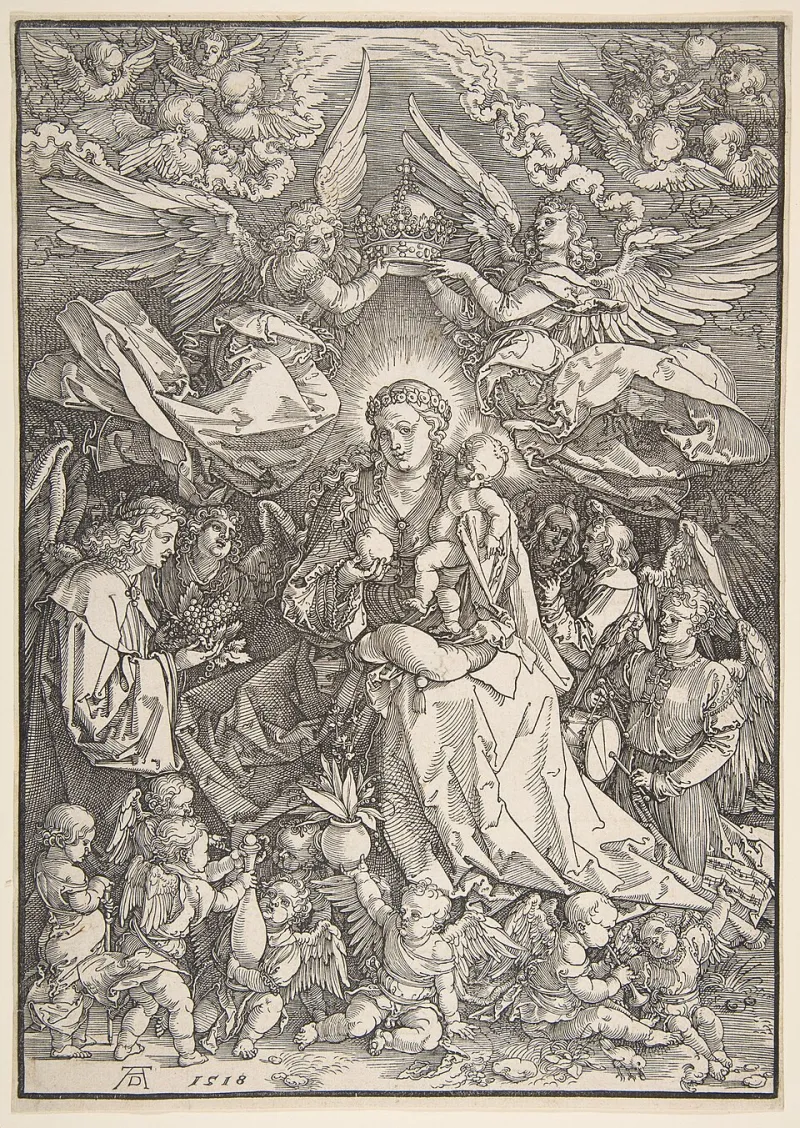
Photo: Albrecht Dürer, CC0, via Wikimedia Commons
Let's just say the quiet part out loud: every creative person you admire is, on some level, a thief.
Not in the plagiarism sense—though that's a real thing and a different conversation. I mean in the fundamental sense that no creative work exists in a vacuum. Every writer has writers they've absorbed. Every filmmaker has directors who shaped their eye. Every musician has a lineage of sound that runs through their own work whether they acknowledge it or not.
The question isn't whether you'll borrow from the people who came before you. You will. The question is how you do it—and whether the borrowing makes you more yourself or less.
Why Influence Gets a Bad Reputation
There's a persistent romantic myth in American creative culture that the best artists arrive fully formed, conjuring original work from some mysterious internal source untouched by outside influence. We talk about originality like it's a virtue that can be compromised by paying too close attention to someone else's work.
This is both historically inaccurate and genuinely damaging advice.
Shakespeare adapted existing stories. Tarantino has built an entire career on visible, deliberate homage. Led Zeppelin borrowed heavily from the blues tradition. Bob Dylan lifted from folk music and old texts. The artists we consider most original are often the ones who were most voraciously, systematically influenced—and who processed those influences so thoroughly that something new came out the other side.
The problem isn't influence. The problem is unprocessed influence. That's where you slide from creative borrowing into hollow imitation.
The Difference Between a Student and a Copycat
Here's a distinction I find genuinely useful: a student studies why something works. A copycat studies what it looks like.
If you read Cormac McCarthy and come away thinking, I should write with no quotation marks and lots of sparse sentences, you've copied the surface. If you come away asking, what does that stripped-down style do emotionally for the reader, and is there a version of that effect that serves my own stories?, you've actually learned something.
The difference is whether you're absorbing form or absorbing function. Form can be mimicked without understanding. Function has to be internalized—and once it is, it tends to come out differently through a different person.
This is the move that separates creative influence from creative theft (the bad kind). You're not trying to reproduce the artifact. You're trying to understand the decision-making behind it, so you can make your own decisions more clearly.
A Practical Framework for Borrowing Well
So how do you actually do this? Here's how I think about it.
Step one: Get obsessive about a small number of influences. Wide, shallow influence tends to produce work that feels generic—a little bit of everything, not quite enough of anything. Deep, narrow influence is more generative. Pick three to five creators whose work genuinely moves you and study them with real intention. Not just consuming their work, but asking questions of it.
Step two: Ask the why questions. When something in another creator's work stops you cold—when a sentence lands, a scene hits harder than expected, a composition does something unexpected—don't just appreciate it and move on. Ask: What exactly is happening here? Why does this work? What choice did this person make, and why did that choice produce this effect?
You're basically reverse-engineering the craft decision. That's a skill, and it gets sharper with practice.
Step three: Deliberately combine influences that don't usually go together. One of the most reliable paths to an original voice is creative collision. What happens when you take the structural precision of one creator and the emotional rawness of another? When you apply a technique from one medium to a completely different one? The combination itself creates something that couldn't have come from either source alone.
This is why cross-disciplinary influence is so valuable. A writer who studies film editing thinks about pacing differently. A designer who reads literary fiction thinks about negative space differently. The transfer of principles across domains tends to produce genuinely new results.
Step four: Run everything through your own filter—your experiences, your obsessions, your specific way of seeing. This is the part that can't be faked or shortcut. Your voice isn't a style you choose. It's the accumulated weight of your particular life, your specific preoccupations, the things that keep you up at night.
When you take a borrowed technique and run it through that filter, it changes. It has to. No one else has your exact combination of influences, experiences, and fixations. The output, if you're doing the work honestly, will be yours.
The Honoring Part
I want to say something that doesn't get said enough in these conversations: acknowledging your influences isn't weakness. It's integrity.
There's a generation of creators—especially online—who seem almost allergic to naming their influences, as if admitting you love a particular writer or filmmaker somehow diminishes your own work. I think that's backwards. Naming the people who shaped you is a form of respect, and it situates your work in a larger conversation rather than pretending it appeared from nowhere.
It also tends to be more honest about how creativity actually works, which connects you to your audience in a more genuine way. When you say this filmmaker changed how I think about structure, and here's what I did with that, you're inviting people into your creative thinking. That's interesting. That's human.
On the Fear of Being Derivative
A lot of creators hold back from leaning into their influences because they're afraid the result will feel derivative—like they're just doing a lesser version of something that already exists.
This fear is worth taking seriously, but not so seriously that it paralyzes you. Here's a practical test: if you can read your finished work and see primarily the source material rather than yourself, you've got more processing to do. But if you can see your influences in the work the way you can see an artist's training in their paintings—present, but transformed—you're in good shape.
The goal isn't to erase where you came from. It's to make where you came from serve where you're going.
Borrow shamelessly. Study deeply. Transform completely. That's the whole game.