Stop Killing Your Own Vision: 10 Traps That Drain Creative Artists Dry
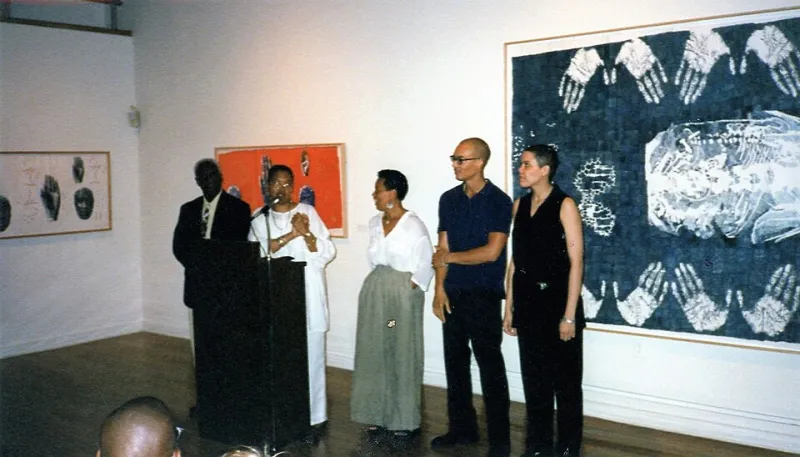
Photo: Coates Gregory, CC BY-SA 4.0, via Wikimedia Commons
You started making things because you had something to say. Somewhere between that first spark and where you are now, things got complicated. There are more voices in the room. More metrics on the dashboard. More stakeholders with opinions. And slowly, almost without noticing, the work starts to sound less like you.
I've watched it happen to talented people. I've felt it pulling at my own work. The good news is that once you can name the thing, you can fight it. Here are ten of the most common vision killers I've seen derail creative professionals — and what it actually looks like to resist them.
1. The Consensus Trap
Collaboration is genuinely valuable. But there's a point where collaboration tips into consensus-seeking, and that's where creative work goes to die. When every decision gets run through a group until everyone is comfortable with it, you end up with work that offends no one and moves no one.
Director Ari Aster has talked about the importance of protecting the specific, uncomfortable qualities of his films from the smoothing-out pressure that comes with studio involvement. Hereditary and Midsommar are divisive precisely because they weren't softened for mass palatability — and that's exactly why they found passionate, devoted audiences.
Takeaway: Collaboration should sharpen your vision, not dilute it. If every note you receive is pushing the work toward safer ground, that's not feedback — it's erosion.
2. Algorithm Anxiety
The metrics are always there, and they're always talking. Watch time, engagement rate, click-through — it's easy to start making creative decisions based on what the numbers seem to want rather than what the work actually needs. This is how you end up making content that performs adequately and means nothing.
YouTuber and filmmaker Casey Neistat built one of the most distinctive voices on the platform by ignoring conventional wisdom about what YouTube videos were supposed to look like. When he started chasing formats that were trending, his work got blander. When he went back to making exactly what he wanted to make, the audience followed.
Takeaway: Algorithms reflect what has already worked, not what could work. They are a rearview mirror. Don't navigate with a rearview mirror.
3. Scope Creep
Every project starts with a clear idea. Then you add a subplot. Then another character. Then a new thematic layer because someone pointed out a connection you hadn't considered. Before long, the project is twice as large and half as focused, and you can't remember what you were originally trying to say.
Scope creep is insidious because each individual addition seems reasonable. It's the accumulation that kills you.
Takeaway: Write down your original intention before you start. Keep it somewhere visible. Every time someone suggests an addition, ask: does this serve that intention, or does it complicate it?
4. The Comparison Spiral
Social media has made it possible to watch your peers succeed in real time, and it has made creative work measurably more psychologically brutal as a result. The comparison spiral — where you spend more energy monitoring what others are doing than actually making your own work — is one of the fastest ways to lose your voice.
When you're constantly benchmarking against other people's output, you inevitably start making adjustments toward their approach. Bit by bit, you stop making your thing and start making a version of their thing.
Takeaway: Curate your inputs aggressively. The work that influences you should inspire and challenge you, not make you feel behind.
5. Over-Explaining Your Work
There's a version of this that shows up in the work itself — the film that tells you exactly what to feel in every scene, the essay that restates its thesis four times to make sure you got it. And there's a version that shows up in how creators talk about their work publicly, over-contextualizing and pre-explaining in ways that actually close off interpretation.
The best work trusts the audience. It leaves room. Over-explanation is often a symptom of insecurity, and insecurity is contagious — audiences feel it.
Takeaway: Finish the work. Then resist the urge to explain it. Let it stand on its own.
6. Premature Feedback
Showing work too early — before it's solid enough to withstand criticism — is one of the most common ways creators derail themselves. Early-stage work is fragile. The wrong note at the wrong moment can send you down a rabbit hole of revision that takes you further from the original idea, not closer to a better version of it.
Actor and filmmaker Greta Gerwig has spoken about the importance of protecting a project during its early development, only bringing in outside perspective when the work is stable enough to be interrogated without collapsing.
Takeaway: Know the difference between work that's ready for feedback and work that's still finding itself. Protect the latter.
7. The Pivot Reflex
Something doesn't immediately find an audience, and the instinct is to pivot — change the format, change the tone, change the angle until something sticks. Sometimes that's the right call. But often, the pivot reflex is just impatience dressed up as strategy.
Many of the most successful creative careers are built on years of consistent, patient work that didn't immediately land. Novelist Celeste Ng spent years writing before Everything I Never Told You broke through. The work didn't change. The moment caught up to it.
Takeaway: Distinguish between pivoting because the work genuinely needs to evolve and pivoting because you're scared. They feel similar from the inside but lead to very different places.
8. Chasing Trends
Trends are, by definition, already happening when you notice them. By the time you've built something designed to ride a trend, the wave has usually already passed. Trend-chasing produces work that feels dated almost immediately — and worse, it requires you to make something you don't actually care about.
Takeaway: Make the thing that only you could make. That is, counterintuitively, the most sustainable creative strategy available to you.
9. The Approval Loop
Some creators get stuck in a cycle where they can't move forward without external validation at every step. Every decision requires sign-off. Every draft needs a response before the next one can begin. This isn't collaboration — it's creative paralysis wearing a collaborative costume.
The approval loop is often rooted in a genuine fear of being wrong, of making something bad. But waiting for permission to trust yourself is a guaranteed way to make nothing worth making.
Takeaway: Build a small, trusted circle for real feedback. Outside of that circle, make decisions and move. Momentum is creative oxygen.
10. Confusing Comfort With Quality
This last one is maybe the most dangerous because it's the hardest to see from the inside. When work feels comfortable — when it comes easily, when it doesn't challenge you, when no one pushes back — it can feel like quality. But comfort and quality are often in direct opposition.
The best work usually comes from the place that's slightly terrifying. The idea you're not sure you can pull off. The story that requires you to be more honest than feels safe. Comfort is a signal worth interrogating.
Takeaway: If the work isn't scaring you a little, ask yourself why. Sometimes the answer is that you've gotten really good. More often, it means you're playing it safe.
Holding the Thread
None of this is about ignoring the industry or refusing to collaborate or pretending the business side doesn't exist. It's about knowing the difference between the pressures that make your work better and the ones that make it smaller.
Your creative voice is the only thing you have that nobody else can replicate. Everything else — the platform, the format, the budget, the distribution — is infrastructure. The voice is the point.
Protect it like it matters. Because it does.
