Why Your Forever-Draft Is the Most Comfortable Lie You're Telling Yourself

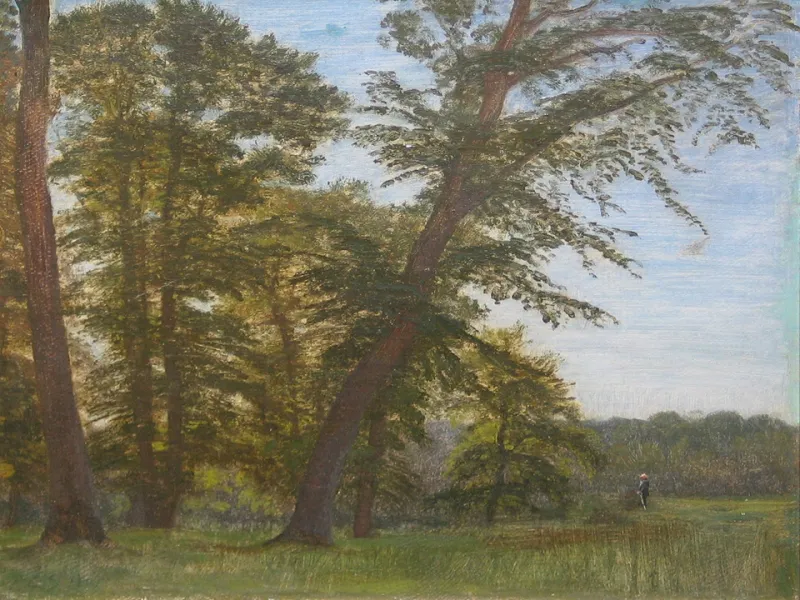
Photo: user:Husky, Public domain, via Wikimedia Commons
Let me ask you something that might sting a little: how long have you been working on that thing?
You know the one. The screenplay that's been 'basically done' since last spring. The essay you keep opening, tweaking a sentence or two, and then quietly closing again. The short film, the album, the series pilot — whatever it is that you describe to people as something you're still working on, even though, if you're being honest with yourself, it stopped growing a long time ago.
There's a name for what's happening here, and it isn't diligence. It isn't perfectionism, either — at least not in the way most people mean it. What you're doing is using the status of 'work-in-progress' as a shield. And it's one of the sneakiest forms of self-sabotage in the creative world.
The Draft That Never Gets Finished Isn't Really a Draft
Here's the thing about a draft: by definition, it's a step toward something. It implies movement, momentum, the eventual arrival at a finished state. But somewhere along the line, a lot of creators — myself included, at various points — start treating the draft not as a stage in a process, but as a permanent address.
Why? Because a draft can't be judged. Not really. Not fairly. As long as something is unfinished, any criticism can be deflected with a simple 'yeah, I know, I'm still working on it.' It's the creative equivalent of keeping your apartment perpetually mid-renovation so no one can comment on your taste.
The unfinished project becomes a psychological buffer zone. It exists in a protected space where failure isn't possible because completion hasn't happened. And in that space, you can feel busy, feel productive, feel like a creator — without ever actually exposing yourself to the one thing that terrifies you most: real judgment from real people.
When Revision Becomes a Disguise
There's a version of revision that is genuinely essential. Going back through your work with fresh eyes, tightening language, cutting what doesn't serve the story, sharpening the argument — that's not avoidance, that's craft. Good work almost always requires it.
But there's another version of revision that has nothing to do with making the work better. It's the kind where you already know the piece is solid, maybe even strong, but you keep poking at it anyway. You change a word, then change it back. You restructure a paragraph that was working fine. You add a new section that dilutes the whole thing, then spend another week trying to fix the dilution.
If you've ever done this — and come on, most of us have — you know what it actually feels like. It doesn't feel like craft. It feels like stalling. It feels like circling the runway without ever landing the plane.
The honest question to ask yourself is this: Am I making this better, or am I just making it feel safer to keep holding onto?
What the Unfinished Work Is Actually Costing You
Staying in draft mode has a hidden price tag that most people don't think about until way too late.
First, there's the opportunity cost. Every hour you spend endlessly reworking something that's already ready is an hour you're not spending on the next thing — the new idea, the project that could be even stronger, the creative risk you haven't taken yet. Your backlog of 'almost finished' work is quietly crowding out the future.
Second, there's what I'd call creative calcification. The longer a project sits in limbo, the more you lose perspective on it. You've read that opening paragraph so many times it doesn't even sound like words anymore. You can't tell what's good and what's mediocre because you're too close to see anything clearly. The very act of holding on too long makes the work harder to finish, not easier.
And third — and this is the one that really gets me — there's the slow erosion of your own confidence. Every day that thing sits unfinished is another day your brain files it under 'evidence that I don't follow through.' You might not consciously think that, but it accumulates. Over time, the pile of unfinished projects starts to feel like a verdict on who you are as a creator.
A Simple Framework for Knowing When to Let Go
So how do you actually tell the difference between productive revision and avoidance dressed up as diligence? Here's the rough framework I've come back to more than once:
Ask if you're solving a real problem. Before you open that draft again, name the specific thing you're trying to fix. Not 'it doesn't feel right' — that's too vague to act on. What, exactly, is broken? If you can't articulate a concrete issue, you're probably not revising. You're just hovering.
Set a revision deadline and mean it. Give yourself a fixed window — a week, two weeks, whatever makes sense for the scope — and commit to the idea that whatever exists at the end of that window is the finished version. Not perfect. Finished. Those are different things, and treating them as the same is exactly what got you here.
Talk to someone outside your head. One of the clearest signs that a project is ready is that you've stopped being able to evaluate it objectively. Find someone you trust — not someone who'll just tell you it's great, but someone who'll engage with it honestly — and let them read it. Their reaction will tell you more in five minutes than another six months of solo revision ever could.
Notice how the work feels to work on. There's a difference between the resistance that comes from tackling something genuinely difficult and the resistance that comes from fear of finishing. Difficult work feels frustrating but forward-moving. Fear feels like treading water. Pay attention to which one you're actually in.
The Release Is Part of the Work
Here's the part nobody really tells you when you're starting out: releasing the work is part of making it. The act of letting go — of saying 'this is done, this is what I made, take it or leave it' — is not separate from the creative process. It's the final step of it.
The draft that lives forever on your hard drive isn't a work-in-progress. It's a work-in-hiding. And the world doesn't get to be moved by something it never gets to see.
You've put in the hours. You've done the work. At some point, the most creative thing you can do is finish.